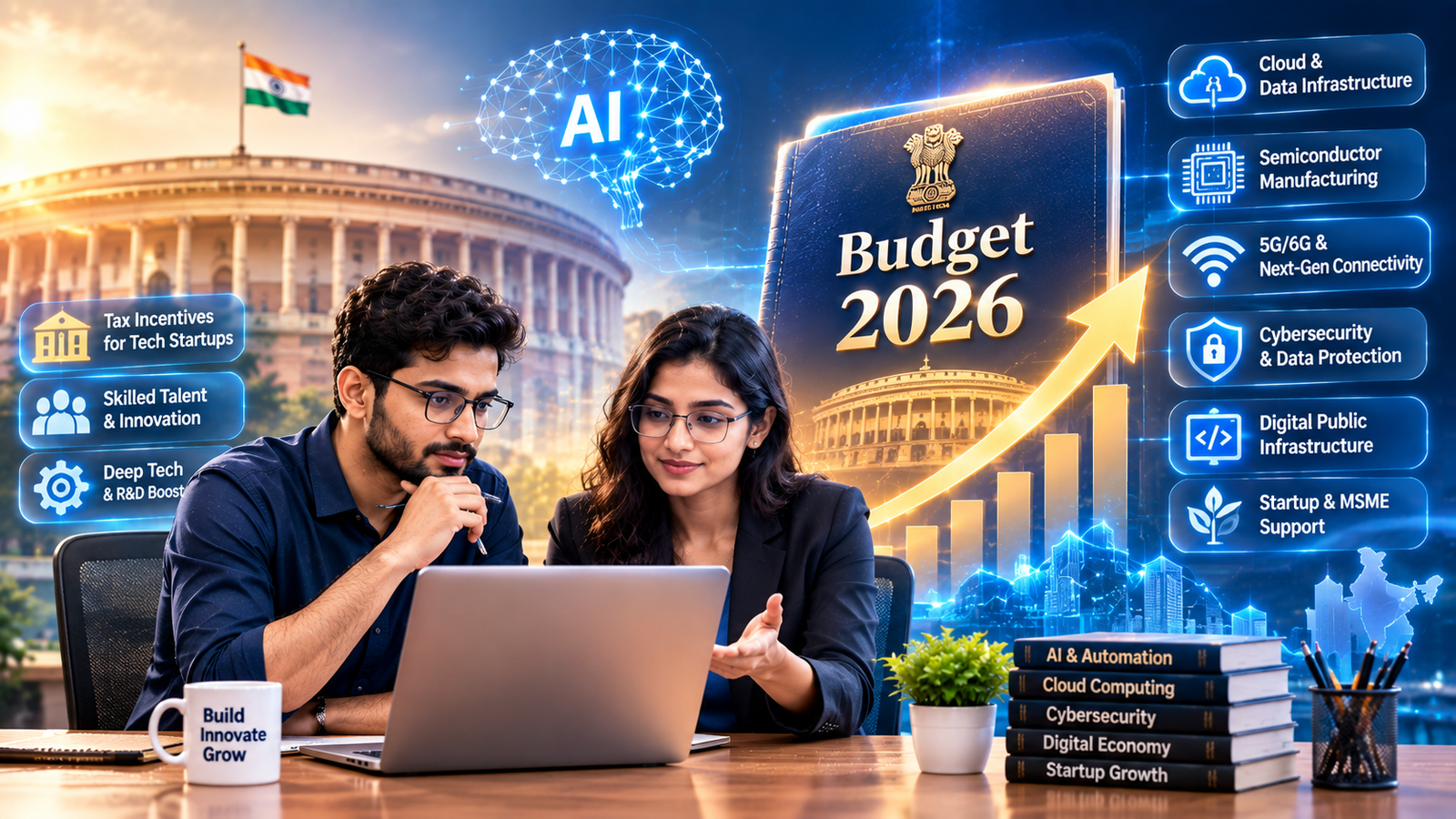
The Union Budget 2026-27 has sent a clear message: technology is no longer just a support function; it is the backbone of India’s economic growth strategy. From startups and MSMEs to public services and digital infrastructure, technology is central to policy thinking.
For founders and developers, Budget 2026 is not just about funding or programs. It is about building an ecosystem. This means creating an environment where innovation can grow, talent can thrive, and technology-led businesses can compete on a global scale.
This blog breaks down the most important technology-related policies in Budget 2026, explains what they really mean, and shows how founders and developers can turn policy intentions into real opportunities.
Earlier budgets viewed technology mainly as an enabler. Budget 2026 sees it as a primary growth engine.
The policy focus has changed to:
• Building digital public infrastructure
• Supporting deep-tech and innovation-led startups
• Helping MSMEs adopt technology
• Preparing India’s workforce for future technologies
This change is important because it shifts the discussion from “how to use technology” to “how to build technology-led businesses.
For founders, this means more space to innovate.
For developers, this means their skills now connect directly to creating enterprises.
One of the strongest pillars of Budget 2026 is ongoing investment in Digital Public Infrastructure (DPI).
India's success with platforms like UPI, Aadhaar, DigiLocker, and GSTN shows that strong public tech platforms can encourage significant private innovation.
What Budget 2026 Reinforces
• Expansion and modernization of digital platforms
• API-driven governance and service delivery
• Seamless digital compliance and onboarding systems
Why Founders Should Care
Digital public infrastructure reduces:
• Cost of customer acquisition
• Compliance complexity
• Time to market
Startups can build:
• Fintech and regtech platforms
• SaaS products integrated with government systems
• Citizen-tech and B2G solutions
Policy Insight:
The government is not competing with startups; it is creating pathways for them.
Budget 2026 clearly positions AI, data, and new technologies as national priorities.
Instead of scattered announcements, the focus is on:
• Research and innovation ecosystems
• Skill development in advanced tech
• Collaboration between industry and academia
Opportunities for Founders
• AI-powered SaaS for MSMEs
• Automation tools for logistics, healthcare, and education
• Data analytics platforms for governance and enterprises
Opportunities for Developers
• AI/ML engineering roles
• Data science and cloud-native development
• Product-focused engineering rather than service-only work
The budget’s approach shows that deep-tech startups will get support at the ecosystem level, not just early-stage funding hype.
One of the most practical technology initiatives in Budget 2026 is MSME digitization.
Millions of small businesses still work with minimal tech use.
The budget aims to change that by:
• Promoting digital tools for accounting, payments, and inventory
• Encouraging e-commerce onboarding
• Simplifying digital compliance What This Means for Tech Entrepreneurs
There is a huge opportunity to build:
• Affordable SaaS tools for small businesses
• Industry-specific software (retail, manufacturing, logistics)
• Tech-enabled service platforms
This is not just about unicorn-scale disruption; it’s about building profitable, sustainable tech businesses that serve Bharat, not just metro India.
The AVGC sector (Animation, Visual Effects, Gaming, Comics) has received focused attention in Budget 2026.
Plans are in place to expand:
• AVGC labs in educational institutions
• Skill development programs
• Industry-ready training ecosystems
Why This Matters
Creative technology is moving from the margins to the mainstream.
Founders can explore:
• Gaming studios
• AR/VR solutions
• Educational content platforms
• Media-tech startups
Developers and creators are no longer limited to freelancing. They can now build product-based creative tech companies.
Budget 2026 changes how we think about skill development. It connects skill-building with entrepreneurship and innovation.
The focus is on:
• Industry-relevant tech skills
• Hands-on, project-based learning
• Entrepreneurial and product thinking
What Developers Should Take Away
The future belongs to developers who:
• Understand business problems
• Build scalable products
• Think beyond code to user experience and value creation
This opens doors to:
• Freelance-to-startup journeys
• Indie product development
• Tech-led consulting businesses
Budget 2026 strongly supports women-led entrepreneurship, and technology plays a key role.
Instead of just financial aid, policies focus on:
• Market access
• Digital platforms
• Skill and ecosystem support
This opens opportunities for:
• Women-led tech startups
• Digital service agencies
• E-commerce and SaaS ventures
Technology lowers traditional barriers, including location, capital, and networks, making entrepreneurship easier to access.
India’s tech industry has long focused on services. Budget 2026 encourages a move toward:
• Product innovation
• Intellectual property creation
• Platform-based businesses
For founders, this is a clear message to:
• Invest in product development
• Focus on scalable models
• Build globally competitive tech solutions
For developers, it means:
• Product engineering roles
• Long-term ownership mindset
• Equity participation opportunities
Policy creates opportunity. Execution creates success.
Action Steps for Founders
• Build around real adoption problems, not just trends.
• Match products with MSME and public-sector needs.
• Use digital public infrastructure APIs.
• Focus on profitability and scale, not just funding.
Action Steps for Developers
• Improve skills in AI, cloud, data, and product engineering.
• Learn business basics alongside technology.
• Explore independent products, SaaS, and freelancing platforms.
• Think like a co-founder, not just an employee.